Removing Pet Urine Odor From Carpet and Subfloor
Removing Pet Urine Odor From Carpet and Subfloor
Living with pets in the Denver metro area brings immense joy, but it also brings the occasional household accident. Whether you are dealing with a senior dog in Arvada or a territorial cat in a Capitol Hill apartment, pet urine is one of the most stubborn indoor air quality challenges a homeowner can face. Most people attempt to solve the problem by spraying a store bought floral scent or using a home steam cleaner. Unfortunately, these methods often make the problem worse. The dry, high altitude climate of Colorado can cause urine to crystallize quickly, while the winter heating season reanimates those smells as the furnace circulates dry air. To truly remove pet urine odor, you must understand that the problem is not just on the surface of your carpet. It is a multi layer issue involving the carpet fibers, the moisture resistant padding, the wooden tack strips, and the structural subfloor beneath.
Why Pet Urine Odor is So Difficult to Neutralize
Pet urine is a complex organic waste product. When it first leaves the animal, it is an acidic liquid. However, as it sits in your carpet, it begins a chemical transformation. Bacteria start to break down the urea, releasing ammonia gas. This is often the sharp, pungent scent people notice first. As the urine continues to decompose, it produces mercaptans, which are the same chemical compounds that give skunk spray its legendary stench.
In the Denver climate, the low humidity can actually work against you. As the liquid evaporates, the uric acid salts become highly concentrated and crystallize. These salts are hygroscopic, meaning they attract moisture from the air. On a humid summer day in Cherry Creek or after a heavy snowmelt, those salt crystals pull moisture from the atmosphere and "off gas" the odor all over again. This is why a room might smell fine one day and terrible the next. Proper remediation requires breaking the chemical bond of these salts rather than just washing the surface fibers.
The Physics of the Soak
Gravity is the enemy of odor removal. When a dog or cat urinates on a carpet, the liquid does not stay on the surface. Within seconds, it travels through the primary and secondary carpet backing. From there, it saturates the foam or rubber padding. Once the padding is full, the liquid pools on the subfloor, which is usually plywood or concrete. If the urine hits the edge of the room, it soaks into the wooden tack strips and even the drywall or baseboards. According to the IICRC S100 Cleaning Standard, professional cleaning must address the entire "sandwich" of flooring materials to be successful.
Understanding the Difference Between Cats and Dogs
While both types of urine are problematic, cat urine is notorious for its longevity and intensity. This is largely due to how feline kidneys function, producing highly concentrated waste. Male cats, especially those that are not neutered, produce pheromones like felinine that add a musky, oily component to the odor. This behavior is often tied to territorial claims. Owners can learn more about these triggers through the ASPCA Cat Urine Marking guide.
Dog urine, while usually less concentrated than cat urine, is typically produced in much larger volumes. A large golden retriever can deposit enough liquid in one sitting to saturate a three foot diameter circle of padding and subfloor. This volume makes it nearly impossible for a homeowner to "blot" the mess away. By the time you find the spot, the liquid has already reached the wooden structure of your Colorado home.
Behavioral Considerations
It is important to determine if the accidents are medical or behavioral. A sudden change in litter box habits might indicate a urinary tract infection or stress. For those struggling with feline issues, the Humane Society Cat Litter Tips offer excellent advice on setup and maintenance. Additionally, keeping your pet healthy through regular checkups is vital, as outlined by the AVMA Indoor Pet Health resources. Once the medical issues are solved, the physical odor in the home must be eliminated to prevent the pet from returning to the same "scented" spot to mark again.
The Failure of Traditional Cleaning Methods
Most Denver homeowners start with a "store bought" solution. These products generally fall into three categories, and unfortunately, none of them work for deep seated subfloor odors.
- Masking Agents: These are heavy perfumes or "mountain breeze" scents. They do not remove the urine; they just try to smell louder than the ammonia. This results in a "peppermint pee" smell that is often more nauseating than the original odor.
- Encapsulants: These products attempt to coat the urine crystals in a polymer. While this might work temporarily, the friction of walking on the carpet eventually breaks the coating, releasing the odor again.
- Ozone Generators: Many cleaning companies still use ozone machines. At Stink Stompers Denver, we avoid ozone because it is a known lung irritant and can damage rubber carpet padding and elastic fibers over time. It is also ineffective at penetrating deep into the wooden subfloor where the salts live.
The EPA Carpet IAQ research highlights how indoor materials can trap pollutants. If the cleaning method does not reach the source, the indoor air quality will continue to suffer, potentially affecting the health of the residents.
The Stink Stompers Denver Professional Process
Jack and the team at Stink Stompers Denver use a scientific approach that relies on the power of Chlorine Dioxide (ClO2) and advanced bio-enzymatic digestion. We do not use "old school" masking agents. Our process is designed to find the urine where it hides and destroy the molecules responsible for the smell.
Inspection and Detection
We begin by using high intensity ultraviolet (UV) lights and moisture meters. Urine contains proteins and salts that fluoresce under specific wavelengths of light. This allows us to map out the exact "hot spots" in your Highlands Ranch or Lakewood home. We often find that a single "spot" on the surface corresponds to a massive puddle underneath the carpet.
The Bio-Enzymatic Flush
For carpets that are still in good structural shape but smell like pets, we use a specialized sub-surface extraction tool. We saturate the area with a bio-enzymatic solution that literally eats the uric acid salts. We then use a heavy duty vacuum system to pull that liquid through the padding and out of the house. This reaches the layers that a standard "steam clean" simply cannot touch.
Chlorine Dioxide (ClO2) Gas Treatment
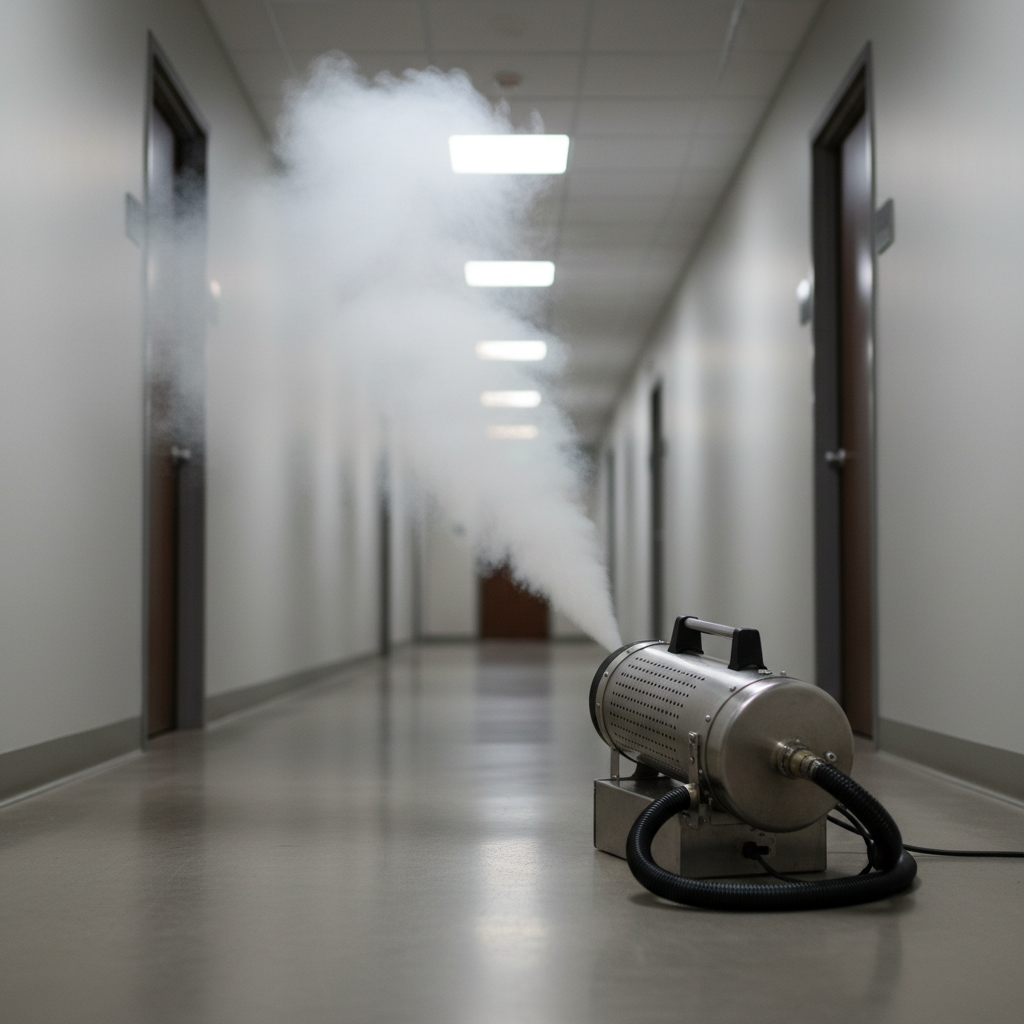
The crown jewel of our process is Chlorine Dioxide. Unlike ozone, ClO2 is a selective oxidant. It is a gas that can penetrate porous materials like wood, drywall, and carpet backing. It seeks out the sulfur and nitrogen compounds in urine and breaks their chemical bonds through oxidation. This changes the molecular structure of the odor, essentially making it cease to exist. Because it behaves as a gas, it can reach the "impossible" places, such as the space between the subfloor and the floor joists.
Why the Subfloor is the Real Culprit
In many cases, the carpet and padding are so saturated that they must be removed. However, simply throwing away the carpet does not solve the problem. Urine is a liquid that follows the path of least resistance. It flows into the seams of plywood or the cracks in a concrete slab.
If you install new premium carpet over a "raw" subfloor that still contains urine salts, the moisture in the new carpet adhesive or the natural humidity in the air will reactivate the old urine. You will have a brand new, expensive floor that still smells like a kennel.
Sealing vs. Remediating Concrete and Wood
When the carpet is pulled back, we often see dark stains on the plywood or white efflorescence on the concrete. We treat these areas with a concentrated ClO2 solution and enzymatic digesters. In extreme cases, after the odor molecules are destroyed, we recommend sealing the subfloor with an odor-blocking primer. This provides a permanent barrier, ensuring that no residual molecules can ever migrate back into your living space. This is a common necessity in older homes in areas like Washington Park where pet accidents may have accumulated over decades.
Preventing Future Odor Issues
Once Jack and the team have cleared the air, maintenance is key to keeping your Denver home smelling fresh. We recommend high quality air filters and ensuring your HVAC system is clean. Because Denver is so dusty, pet dander and skin cells can accumulate in the carpet, providing a food source for bacteria. Regular vacuuming with a HEPA filter vacuum is essential.
If an accident does happen after we have performed a reset, the best course of action is to blot (never scrub) the area with a clean white towel. Use a mixture of water and clear dish soap, or a dedicated enzymatic cleaner. Avoid anything with ammonia, as ammonia is a component of urine and may actually encourage your pet to "re-mark" that spot.
Frequently Asked Questions
Can't I just use a steam cleaner from the grocery store? Home steam cleaners use hot water and soap, but they usually lack the suction power to remove the liquid from the padding. This often results in "wicking," where the urine is diluted and spread over a larger area, and the moisture trapped in the padding can lead to mold growth. Professional grade extraction is necessary for deep saturation.
Is Chlorine Dioxide safe for my family and pets? Yes, when applied by professionals like Stink Stompers Denver. ClO2 is used globally to treat drinking water and disinfect food. Unlike ozone, it does not leave behind harmful residues or "burned" smells. Once our process is complete and the home is ventilated, it is perfectly safe for your four legged family members to move back in.
How long does the pet odor removal process take? Most residential treatments in the Denver metro area take between four to eight hours. Some extreme cases requiring subfloor sealing or multiple gas treatments may take longer. We provide a clear timeline after our initial inspection so you can plan accordingly.
Do you guarantee that the smell will be gone? We take pride in our "Stink Stomper" reputation. Our process is designed to eliminate odors at the molecular level. If the source of the odor (the urine) is properly identified and treated within the subfloor and materials, the smell is gone permanently. We do not use "masking" scents, so you aren't just waiting for a perfume to wear off.
Get a Denver Odor Reset
If you are tired of coming home to a house that smells like a litter box or a dog kennel, it is time to call in the professionals. Jack and the team at Stink Stompers Denver specialize in the toughest pet urine cases that standard cleaners simply cannot handle. We serve the entire Denver metro area and the Front Range with high science, non toxic solutions that restore your home to a neutral, breathable state. Stop living with the "peppermint pee" smell and fix the problem at the subfloor level. Call us today at 720-791-3001 or visit our /contact page to schedule an inspection and get your free estimate.