
Whole House Odor Reset for Denver Homes
A Whole House Reset treats every room, every vent, and every porous surface in your home with a controlled chlorine dioxide (ClO2) process that destroys odor molecules at the source. It is the same process we use for high-value real estate turnovers, scaled for homeowners who want a true fresh start.
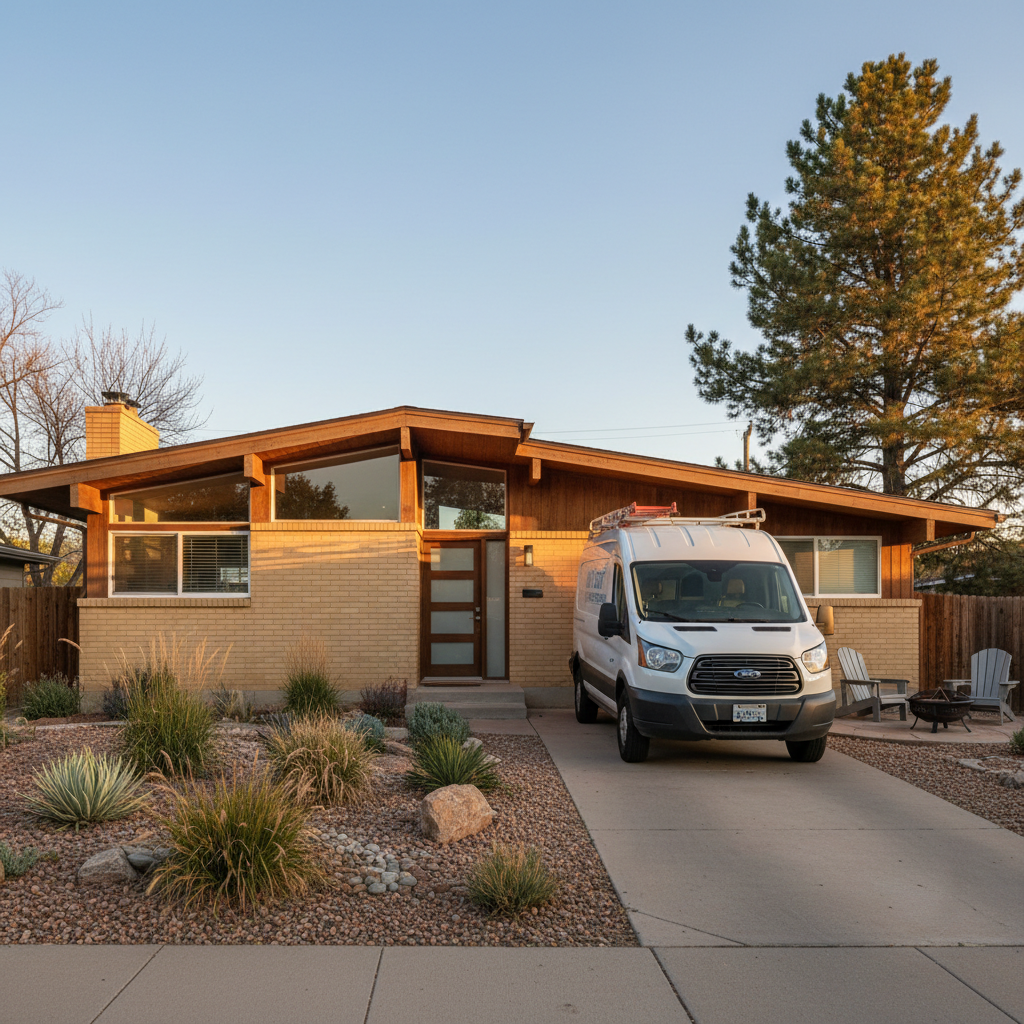
What we treat
- Treats every room plus HVAC ductwork and wall cavities
- Eliminates smoke, pet, musty, cooking and biological odors in one treatment
- Professional ClO2 process, never ozone, never masking fragrances
- Typical dwell time of four to twenty four hours, then the home is ready
- Backed by our 100 percent satisfaction guarantee
Service area
We serve homes and businesses within roughly 20 miles of our Denver facility, including Aurora, Lakewood, Arvada, Westminster, Thornton, Centennial, Englewood, Littleton, Highlands Ranch and Wheat Ridge.
See all service areasThe Science of Whole Property Odor Contamination
Whole property odor contamination arises when microscopic odor-causing molecules become widely distributed and adsorbed onto or absorbed into the vast array of surfaces within a building. These molecules, often volatile organic compounds (VOCs) or nitrogenous/sulfurous compounds, possess diverse chemical structures that allow them to bond with or become trapped within materials differently. For instance, pyridine and quinoline (components of tobacco smoke) are basic compounds that readily adsorb onto acidic surfaces and porous materials like textiles, drywall, and wood. Uric acid crystals from pet urine can embed themselves deep within carpet fibers and subflooring, continuing to release ammonia and other putrid gases as they react with humidity. Microbial Volatile Organic Compounds (mVOCs), emitted by fungi and bacteria, can permeate materials and travel through air currents, creating a musty odor profile throughout an entire structure, distinguishing them from visible mold growth. The EPA and National Institutes of Health (NIH) acknowledge that these molecular interactions are complex, making passive ventilation or superficial cleaning insufficient. Odor molecules do not simply dissipate; they chemically or physically bond to materials, requiring a targeted intervention to break these bonds or neutralize the molecules.
Why Standard Odor Fixes Fall Short for Widespread Contamination
Common approaches to odor removal frequently prove inadequate for whole property contamination because they fail to address the underlying molecular problem. Air fresheners, for example, introduce perfumed compounds that temporarily overwhelm or mask existing odors rather than eliminating the source. This can lead to a mixture of scents that is often more unpleasant than the original odor. Surface cleaning, while essential for hygiene, penetrates only the uppermost layer of porous materials. Odor molecules often reside deep within carpet padding, insulation, unsealed wood, and even drywall, where liquid cleaning agents cannot reach or fully extract them. Painting may encapsulate odors for a period, but many volatile organic compounds can eventually leach through new paint layers, particularly if the surface was not properly sealed beforehand. Ozone generators are frequently promoted for odor removal, but the U.S. Environmental Protection Agency (EPA) explicitly states that ozone, at concentrations safe for humans, is generally ineffective in controlling indoor air pollution. At concentrations high enough to significantly react with odor molecules, ozone becomes a respiratory irritant and can cause damage to materials, making its use in occupied spaces problematic. These methods fail because they do not employ a mechanism to chemically alter or neutralize the odor molecules at their source, throughout all affected materials.
Our Comprehensive Odor Inspection Process
Our inspection process for a whole-property odor reset begins with a detailed, systematic assessment of the entire structure. Jack Martin, with over 42 years of experience and IICRC credentials, personally conducts these initial assessments. We utilize specialized tools to precisely identify affected areas and the nature of the contamination. This includes a moisture meter to detect hidden sources of dampness that can harbor microbial growth, and a boroscope camera for inspecting concealed spaces like wall cavities and HVAC ductwork without destructive entry. For pet urine, a high-intensity UV light reveals uric acid salt crystallization on surfaces. Throughout the inspection, we ask targeted questions about the property's history: When did the odor begin? What events preceded it? Have any remediation attempts been made, and what were the results? We also inquire about the composition of construction materials, the age of the HVAC system, and any known ventilation issues. Our goal is to develop a precise odor profile, understand the pathways of odor migration, and identify all reservoirs of contamination to formulate an effective treatment strategy, rather than making assumptions about the source or intensity of the problem.
Our Chlorine Dioxide Whole-Property Treatment Methodology
Our whole-property odor treatment centers on the controlled application of gaseous chlorine dioxide (ClO2). Prior to treatment, the property undergoes thorough preparation: all non-essential items, especially sensitive electronics, foodstuffs, and living organisms, are removed. Surfaces are cleaned to remove gross contamination, as ClO2 is a gas and needs direct contact with the odor molecules, not the dirt. We then seal the property to maintain a contained environment for the ClO2 gas. Using specialized generators, we introduce pharmaceutical-grade ClO2 gas into the sealed structure at specific concentrations controlled by the cubic footage and known contamination levels. ClO2 is a highly reactive oxidant that functions by irreversible molecular bonding. It oxidizes and thus neutralizes a broad spectrum of organic odor compounds, including those from smoke, pets, and biological decomposition, at a molecular level, rather than masking them. The gas penetrates porous materials (like carpet, upholstery, and drywall) and circulates through the HVAC system, reaching areas that liquid applications or surface cleaning cannot. The dwell time, typically 6 to 24 hours depending on contamination severity, allows for maximum molecular interaction. Afterwards, the property is thoroughly ventilated using negative air machines and air scrubbers equipped with HEPA and activated carbon filters to remove all reaction byproducts and residual ClO2 gas until air quality is verified as safe for re-occupancy.
Specialized Equipment for Comprehensive Odor Removal
The effectiveness of our whole-property odor reset is directly linked to the precision and capabilities of our specialized equipment. Our primary tool is the ClO2 gas generator, which produces pharmaceutical-grade chlorine dioxide from precursor chemicals in a controlled manner, allowing us to regulate concentration based on the property's volume and the severity of contamination. We use commercial-grade air scrubbers equipped with HEPA filtration (to capture particulate matter as small as 0.3 microns) and activated carbon filters (to adsorb remaining VOCs and exhaust residual ClO2 gas). Industrial-strength negative air machines are deployed during ventilation to create directed airflow, rapidly evacuating treated air and replacing it with fresh, filtered outdoor air. Humidity meters and temperature gauges are used to monitor atmospheric conditions, as both factors influence ClO2 reactivity and penetration depth. During the inspection phase, we employ high-intensity UV lights to pinpoint pet urine contamination, and moisture meters with pin and pinless functions for non-destructive detection of hidden dampness. A particle counter is utilized during verification to measure the air cleanliness after treatment and ventilation, providing objective data on improved air quality. Thermal foggers may also be used in specific pre-treatment scenarios or for localized application of specialized odor counteractants, although ambient ClO2 gas remains the core whole-property treatment.
Addressing Unique Challenges in Odor Remediation
Each odor remediation project presents its own set of unique challenges that require tailored solutions. Heavy contamination, such as from long-term hoarding or severe fire damage, necessitates prolonged dwell times for ClO2 gas and may require pre-treatment steps, including detailed content cleaning or selective material removal, before gas treatment can be fully effective. For properties with sensitive occupants (e.g., individuals with respiratory conditions, young children, or the elderly), we implement extended ventilation periods and rigorous post-treatment air quality testing to ensure all airborne contaminants and ClO2 byproducts are well below safe re-entry levels. Historic homes often contain delicate finishes, antique furnishings, or unique construction materials that demand careful handling; our ClO2 gas treatment is generally non-corrosive and safe for most materials, but we conduct pre-treatment material compatibility tests where appropriate. High-value assets, including artwork, musical instruments, and electronic equipment, are either meticulously prepared, sealed, or removed from the treatment area to prevent any potential interaction with the oxidizing gas. These considerations are integral to our planning, ensuring both effective odor removal and the preservation of property integrity, reflecting a comprehensive approach beyond standard protocols.
Treatment Timeline and Property Re-entry Expectations
The typical timeline for a whole-property odor reset varies based on the size of the property and the severity of the contamination. Generally, the on-site preparation phase, involving sealing the property and setting up equipment, takes approximately 2 to 4 hours. The ClO2 gas generation and dwell time usually spans 6 to 24 hours, during which the property must remain unoccupied. This period allows the chlorine dioxide gas sufficient time to penetrate all affected materials and neutralize odor molecules effectively. Following the dwell time, the ventilation phase begins, utilizing industrial-grade air scrubbers and negative air machines. This critical step typically lasts another 6 to 12 hours, ensuring all residual ClO2 gas and any reaction byproducts are safely evacuated from the interior. Re-entry usually occurs after air quality readings confirm safe atmospheric conditions, which can be verified with specific gas detectors. For a moderately contaminated 2,000 square foot home, the entire process, from setup to verified re-entry, often takes 24 to 48 hours. We communicate clear re-entry instructions and expected durations throughout the project to maintain transparency and ensure safety.
When Replacement is the More Effective Solution
While chlorine dioxide gas is highly effective, there are specific situations where certain materials may be too saturated or compromised for even molecular odor neutralization, making replacement the more practical and cost-effective solution. Heavily contaminated carpet padding, particularly from repeated pet urine incidents or extensive smoke residue, often acts as a deep reservoir that may be beyond the reach of complete gaseous penetration. In such cases, removing and replacing the carpet and padding, and treating the subfloor, is advisable. Similar considerations apply to severely stained or warped drywall sections, which might be easier to remove than to fully deodorize. HVAC filters, especially those that have accumulated significant amounts of smoke, pet dander, or mold spores, must always be replaced as part of any comprehensive odor treatment to prevent re-circulation of contaminants. Insulation in attics or wall cavities that has been directly exposed to saturation from urine, sewage, or fire damage should often be removed and replaced, as its porous, fibrous nature can trap odors to an extent that complete ClO2 treatment may not fully address. We provide an honest assessment during inspection, recommending replacement only when treatment is unlikely to yield optimal, lasting results.
Denver Metro Area Specific Considerations for Odor Treatment
Operating in the Denver metro area introduces specific environmental and regulatory factors that influence odor treatment protocols. While high altitude is often cited as a concern for various chemical reactions, studies indicate that the kinetics of chlorine dioxide oxidation are not significantly hindered in Denver's elevation. However, Denver's arid climate, particularly during dry winters, results in very low indoor humidity levels. This can affect the rate at which ClO2 interacts with some adsorbed odor molecules; we adjust our humidification levels within the sealed environment when necessary to optimize ClO2 reactivity. The prevalence of wildfire seasons in Colorado can lead to significant smoke infiltration across large areas, causing widespread third-hand smoke contamination that requires extensive whole-property treatment. Additionally, local HOA rules in communities like Highlands Ranch or Cherry Creek sometimes have specific requirements regarding property remediation or external equipment placement, which we carefully navigate. For properties requiring meth remediation, Colorado Revised Statutes 6 CCR 1014-3 dictates strict protocols. We only provide odor reduction services after a property has undergone certified meth decontamination by a state-licensed contractor, ensuring compliance and safety, as ClO2 treatment is for odor and not for the primary chemical decontamination.
Post-Treatment Verification and Guarantee
Upon completion of the chlorine dioxide gas treatment and subsequent ventilation, our work is not considered finished until comprehensive verification steps are taken. Our team, led by Jack Martin, conducts a thorough post-treatment inspection, critically evaluating the property using our sense of smell as a primary indicator, alongside objective measurements. We utilize sensitive particle counters to assess indoor air quality, measuring airborne particulate matter to confirm that contaminants have been effectively removed and the environment is clean. We also employ specific gas detectors to ensure that all residual ClO2 and its byproducts are below safe re-entry thresholds before releasing the property for re-occupancy. This meticulous verification process is designed to confirm the successful removal of the target odors. We stand by the efficacy of our methodology, offering a guarantee that if the original, specifically targeted odor returns within a reasonable timeframe, we will re-evaluate and re-treat the affected areas at no additional cost. This commitment underscores our confidence in the science-backed approach and our dedication to achieving lasting results for our clients.
Frequently asked questions
What types of odors can a Whole House Reset effectively remove?+
Our Whole House Reset using chlorine dioxide gas is effective against a broad spectrum of pervasive odors, including those from tobacco smoke (nicotine and tar residues, 'third-hand smoke'), pet urine and dander, cooking residues, general biological decomposition odors, and musty odors associated with microbial volatile organic compounds (mVOCs) released by mold or bacteria. It neutralizes these organic molecules at a chemical level.
Is the chlorine dioxide gas treatment safe for all household items and electronics?+
While chlorine dioxide gas is generally non-corrosive to most common household materials, we require the removal of sensitive electronics, valuable artwork, plants, pets, and food items from the property prior to treatment. This precaution prevents any potential interaction with the oxidizing gas, ensuring the safety and preservation of your belongings. Our team provides specific guidance on what needs to be removed.
How long will I need to be out of my home during the treatment process?+
You will typically need to vacate your property for approximately 24 to 48 hours for a Whole House Reset. This duration accounts for the sealing and setup phase, the critical gas dwell time (6-24 hours), and the thorough ventilation process necessary to clear all residual gas and byproducts before verified safe re-entry. We provide clear re-entry instructions once air quality is confirmed.
Can I simply paint over severe smoke odors instead of gas treatment?+
Painting over severe smoke odors is rarely a long-term solution. While some encapsulating primers can temporarily mask the smell, the volatile organic compounds (VOCs) from smoke can eventually leach through new paint layers, particularly in humid conditions, causing the odor to reappear. Our ClO2 gas treatment chemically neutralizes these deeply embedded odor molecules, offering a more permanent solution.
What about my HVAC system? Will the odors trapped there be removed?+
Yes, our Whole House Reset specifically addresses the HVAC system. During treatment, the chlorine dioxide gas circulates throughout the ductwork, neutralizing trapped odor molecules on surfaces within the ventilation system. We also mandate replacing all HVAC filters before or immediately after treatment to prevent recirculation of particles and maintain improved air quality.
Do you treat properties with mold issues?+
Our chlorine dioxide gas treatment is highly effective at neutralizing odors associated with microbial volatile organic compounds (mVOCs) released by mold and bacteria. However, ClO2 treatment does not remediate the mold itself. If visible mold growth is present, it must be physically removed and the moisture source addressed by a qualified mold remediation specialist before we can effectively treat the residual odors.
Is your treatment effective for 'third-hand smoke' odors?+
Yes, our Whole House Reset is particularly effective against 'third-hand smoke' odors. Third-hand smoke consists of the residual chemicals and particles from tobacco smoke that adsorb onto surfaces like walls, furniture, and carpets. Chlorine dioxide gas penetrates these porous materials and chemically oxidizes the trapped nicotine, tar, and other odor-causing compounds, neutralizing the lingering smell.
What guarantees do you offer for odor removal?+
We offer a satisfaction guarantee on our Whole House Reset. We commit to re-evaluating and re-treating the affected areas at no additional cost if the original, specifically targeted odor returns within a reasonable timeframe after our service. This commitment reflects our confidence in the scientific efficacy of our methods and our dedication to lasting results.
How does this compare to using an ozone generator?+
Our chlorine dioxide (ClO2) treatment differs significantly from ozone. The U.S. Environmental Protection Agency (EPA) states that ozone, at concentrations safe for human exposure, is generally ineffective against odors. At concentrations high enough to impact odors, ozone is a respiratory irritant and can damage materials. ClO2, when applied by trained personnel in an unoccupied space, chemically oxidizes and permanently neutralizes a wider range of odor molecules without producing the harmful byproducts often associated with high ozone levels.
Are there any lingering chemical smells after the treatment?+
Following the controlled dwell time, the property undergoes extensive ventilation using industrial-grade air scrubbers and negative air machines. This process rapidly removes all residual chlorine dioxide gas and any reaction byproducts. Our post-treatment air quality verification ensures that the property is free from any lingering chemical smells and safe for re-occupancy before we conclude the service.
IICRC-credentialed. 42+ years of odor removal experience. Thousands of completed odor removal projects across the Denver metro.
Reviewed and updated: .
Related in Signature Services
Get a Whole House Reset quote
Honest quote, fast scheduling, fully guaranteed work.
- 100% Satisfaction Guarantee
- Eco-friendly, non-toxic, pet and kid safe
- Same-day response on most requests