HVAC Duct Cleaning and Odor Removal: What Actually Works
HVAC Duct Cleaning and Odor Removal: What Actually Works
When homeowners in Denver notice a persistent musty smell or the lingering ghost of a previous tenant's cigarette habit, their first instinct is often to call a standard HVAC cleaning company. There is a common misconception that vacuuming out the dust from your vents will magically refresh the air quality of the entire home. While keeping your mechanical systems clean is a vital part of home maintenance, standard duct cleaning is rarely the silver bullet for odor removal. In the high altitude, semi-arid climate of the Colorado Front Range, air quality issues are compounded by low humidity and the way our sealed, energy-efficient homes trap volatile organic compounds (VOCs).
At Stink Stompers Denver, we see the frustration of homeowners who have spent hundreds of dollars on "brush and vacuum" services only to find that the smell returns within hours. Odors are not just particles; they are gases and microscopic molecules that embed themselves into the porous surfaces of your ductwork and the surrounding building materials. To truly eliminate a smell, you have to move beyond mechanical agitation and into the realm of molecular chemistry. This guide explains what actually works, what the experts recommend, and why our specialized chlorine dioxide treatment is the missing link in your Denver home air quality strategy.
The Reality of Standard HVAC Duct Cleaning
Most people assume that the dust inside their vents is the source of all indoor air quality woes. However, the EPA Should You Have Air Ducts Cleaned guide points out that duct cleaning has never been shown to actually prevent health problems. Furthermore, just removing the dust does not necessarily remove the odor. If the dust has absorbed tobacco smoke, pet urine proteins, or mold spores, the metallic or fiberglass surfaces of the ducts will still harbor those scents even after a vacuum passes through.
What Standard Cleaning Does
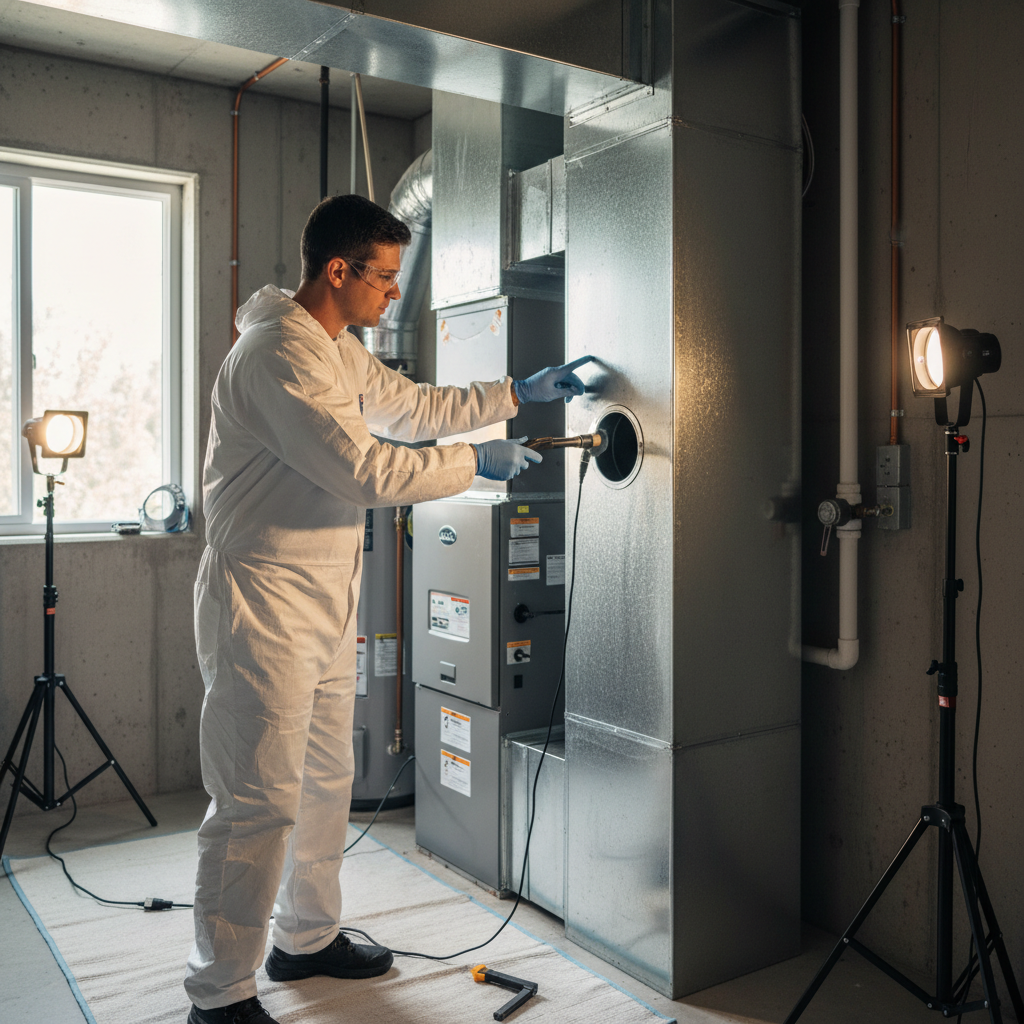
A traditional cleaning involves high powered vacuums and rotating brushes. This is excellent for removing hair, dander, and large debris that might be restricting airflow. If your vents are physically clogged, a cleaning can improve the efficiency of your system, which aligns with DOE HVAC Basics regarding energy consumption and system longevity. It prevents the mechanical components from wearing out prematurely due to friction and heat buildup.
What Standard Cleaning Misses
The limitation of mechanical cleaning is that it cannot reach the microscopic level. Odors are often caused by "bio-films" or chemical residues that coat the interior of the ductwork. Brushes cannot scrub away a molecular gas. If you have a "dirty sock syndrome" smell, it is usually caused by bacteria growing on the evaporator coil. A vacuum will not kill that bacteria. If you have smoke damage, the chemicals are bonded to the lining of the ducts. You could vacuum for days and the smell would remain because the source is trapped in the substrate.
National Standards and Indoor Air Quality
To understand how to properly treat a home, we look to organizations like NADCA (the National Air Duct Cleaners Association). They provide the industry standards for how a system should be physically accessed and cleaned. Following these protocols ensures that the structure of your HVAC system is not damaged during the process. However, even within these professional standards, there is a clear distinction between "clean" and "decontaminated."
Ventilation and Air Exchange
In Denver, our homes are often built to be airtight to combat the cold winters. This means we rely heavily on mechanical ventilation. The ASHRAE 62.2 standard defines the roles of mechanical systems in maintaining acceptable indoor air quality in residential buildings. If your ducts are clean but the air is not being treated for odors, you are simply recirculating "clean-looking" smelly air. Proper indoor air quality requires a combination of source removal, mechanical cleaning, and chemical decontamination.
Health and Safety Considerations
The CDC Ventilation guidelines emphasize that well-maintained HVAC systems are crucial for reducing the spread of airborne pathogens. In a post pandemic world, Denver residents are more aware than ever of what is floating in their air. When an odor is present, it is often a signal that biological contaminants or VOCs are present. Simply moving these particles around with a brush can sometimes make the problem worse by aerosolizing the very things you are trying to remove.
Why Odors Persist After Cleaning
There are several reasons why a standard duct cleaning fails to solve odor problems in Colorado homes. Understanding these factors can save you thousands of dollars in ineffective treatments.
Porous Materials and Latent Odors
Many HVAC systems in the Denver area use "duct board" or internally lined flexible ductwork. Unlike galvanized sheet metal, these materials are porous. They act like a sponge for smells. When a previous owner smoked in the house, the nicotine and tar traveled through the return air vents and soaked into the insulation inside the ducts. A vacuum cannot pull a liquid or a dried resin out of insulation.
The Problem with Fragrance Masking
Many "carpet and duct" companies offer a deodorizing spray as an add-on. This is typically a synthetic fragrance that is misted into the system. It smells like "fresh linen" or "mountain breeze" for three days, but as soon as the fragrance dissipates, the original foul odor returns. Worse, these synthetic fragrances often trigger allergies or asthma for sensitive individuals. At Stink Stompers Denver, we never use masking agents. If it doesn't smell like nothing, it isn't clean.
Ozone Dangers
Some companies use ozone generators to "shock" the house. While ozone is an oxidant, it is also a known respiratory irritant that can damage plastics, rubbers, and even the internal components of your furnace. Ozone can react with carpets and pads to create new, even more toxic VOCs. We have seen many Denver homes where an ozone treatment left a "burnt" smell that was harder to remove than the original odor.
The Stink Stompers Approach: Chlorine Dioxide (ClO2)
We do things differently because we focus on the science of the smell. Our primary tool is Chlorine Dioxide (ClO2) in a vapor form. Unlike ozone, ClO2 is a selective oxidant. This means it targets the sulfur and nitrogen compounds that make up most foul odors without damaging the materials inside your home.
How ClO2 Works in Ductwork
When we treat a home in the Denver metro area, we utilize the HVAC system as a delivery vehicle. By introducing ClO2 vapor into the return air, we ensure the gas travels the exact same path that the odors did. The gas penetrates the porous linings of the ducts, the evaporator coils, and the heat exchanger. It neutralizes the odor molecules on contact by changing their molecular structure. It turns a smelly molecule into an odorless salt.
The Advantage of Vapor over Liquid
Liquid sprays can only go where the nozzle is pointed. If there is a bend in your ductwork, the spray hits the wall and stops. Vapor, however, fills the entire volume of the space. It reaches every corner and every microscopic crack in your ventilation system. This is why our process is so effective for severe odors like curry, pet urine, or heavy tobacco smoke.
Bio-Enzymatic Support
For physical messes, such as where a rodent might have died or an area with heavy pet accidents near a vent, we use bio-enzymatic cleaners. These enzymes "eat" the organic proteins that cause the smell. By combining enzymes for the source and ClO2 vapor for the airborne and embedded smells, we provide a comprehensive "odor reset" that standard cleaners simply cannot match.
Common Odor Scenarios in Denver Homes
Denver has a unique mix of older historic homes in neighborhoods like Washington Park or Highlands, and newer builds in areas like Stapleton or Aurora. Each comes with its own set of HVAC odor challenges.
The "Musty" Basement Smell
In Colorado, many basements are finished but lack proper return air vents. This leads to stagnant air and localized humidity, creating a musty smell that gets sucked into the main HVAC system. We treat the entire volume of the house to ensure that musty basement smell is neutralized at the source and within the ductwork.
Marijuana and Tobacco Smoke
With the legality of cannabis in Colorado, we frequently deal with "skunk" odors embedded in HVAC systems. Similar to tobacco, these oils are sticky and pervasive. Our ClO2 process breaks down the resins and oils that have plated out onto the inside of the ducts, providing a fresh start for new homeowners.
Pet Urine and Dander
Pets are a huge part of the Colorado lifestyle, but they can take a toll on indoor air quality. If a pet has urinated near a floor register, the smell can be pulled into the system and distributed to every room. Our enzymes break down the uric acid crystals, and our gas treatment ensures the "wet dog" smell is removed from the air handling unit itself.
Why We Don't Use Ozone or Masks
Jack, the owner of Stink Stompers Denver, has built the business on the principle of "True Clean." We believe that a home should smell like nothing. We avoid ozone because of its potential to create secondary pollutants and its harshness on household items. We avoid fragrances because they are a temporary lie told to the customer's nose.
Our goal is to provide a safe, non-toxic environment for families and pets. Our ClO2 process breaks down into simple salts and water, leaving no harmful residues behind. This is especially important in the Denver area, where we spend so much of our time indoors during the winter months. We want the air you breathe to be as clear as a mountain morning, not a chemical cocktail.
Frequently Asked Questions
Does duct cleaning remove the smell of cigarette smoke?
Standard duct cleaning will remove the soot and ash, but it rarely removes the chemical odor of nicotine and tar embedded in the duct liners. Our chlorine dioxide vapor treatment is required to actually neutralize the smoke molecules at a molecular level so the smell does not return when the furnace kicks on.
Is your process safe for pets and children?
Yes. Unlike ozone, which can be harmful to lungs and requires long "air-out" periods, our chlorine dioxide and bio-enzymatic process is designed to be safe and leave no toxic residues. We ask that people and pets are out of the home during the active vapor treatment, but you can return to a fresh, odor free home shortly after.
How long does the odor removal process take?
Most residential treatments in the Denver area take between 4 to 8 hours depending on the size of the home and the severity of the odor. This includes the time for the ClO2 vapor to circulate through the HVAC system and the surrounding rooms to ensure a total "odor reset."
Why shouldn't I just use a masking spray or a plug-in?
Masking agents only add more chemicals to your air. They don't remove the source of the smell; they just frustrate your nose's ability to detect it. Once the fragrance wears off, the bacteria, mold, or chemical residues are still there. Our process eliminates the source so you don't need artificial scents.
Get a Denver Odor Reset
If you are tired of living with "mystery smells" or have spent money on duct cleaning that didn't work, it is time for a professional odor reset. At Stink Stompers Denver, Jack and the team specialize in the toughest cases, from pet accidents to heavy smoke. We serve the entire Denver metro area and the Front Range with a commitment to science based, non-toxic odor removal. Do not just move the dust around, eliminate the smell for good. Call us today at 720-791-3001 or visit our /contact page to schedule an inspection and get your home smelling fresh again.