
Basement Odor Removal Denver Colorado
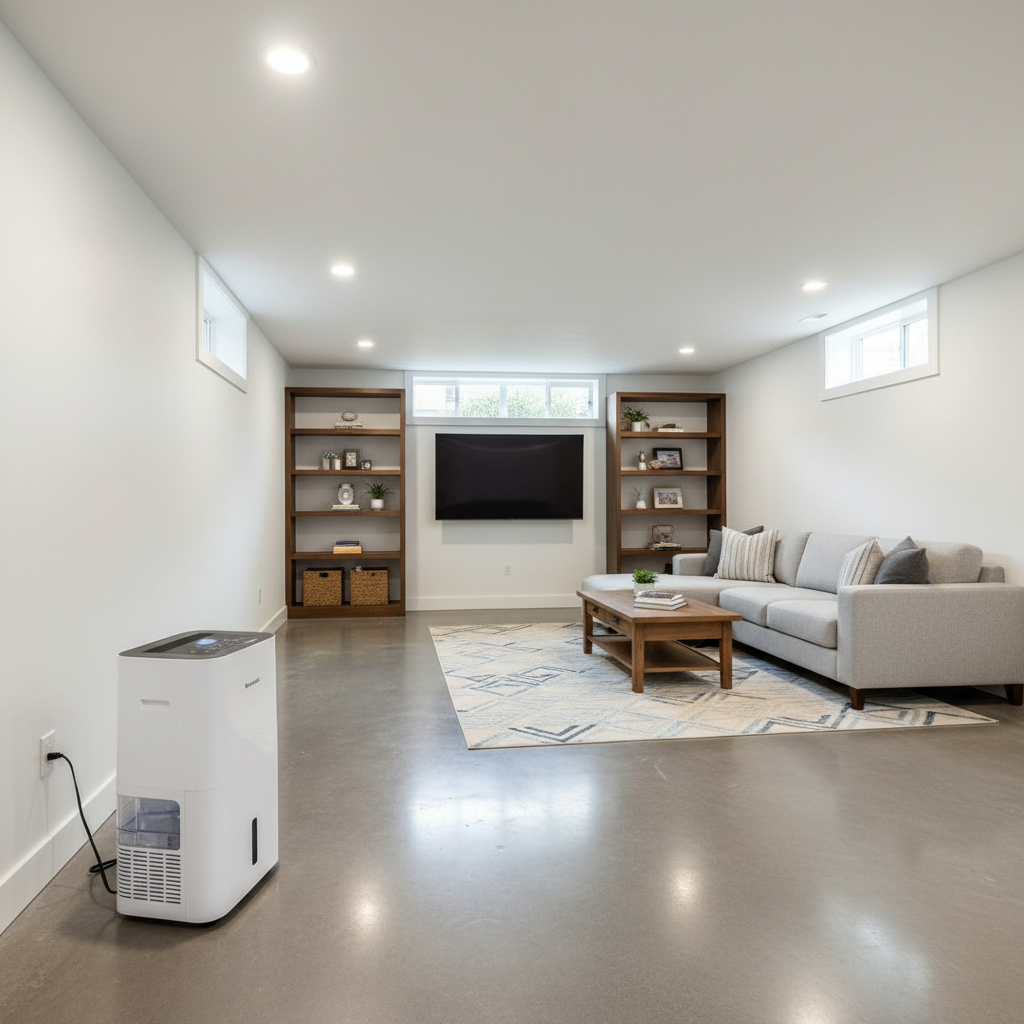
A basement that smells is telling you about moisture, biological growth or trapped air. We deodorize the space, decontaminate porous surfaces and coordinate with mold remediation when needed so the smell does not spread to the rest of the house.
What we treat
- Finished and unfinished basement treatment
- Post-flood and water damage odor cleanup
- Coordination with mold remediation
- HVAC return air treatment
- Long-vacant home basement resets
Service area
We serve homes and businesses within roughly 20 miles of our Denver facility, including Aurora, Lakewood, Arvada, Westminster, Thornton, Centennial, Englewood, Littleton, Highlands Ranch and Wheat Ridge.
See all service areasThe Science of Musty Basement Odors: mVOCs and Microbial Activity
Musty basement odors are primarily a byproduct of microbial volatile organic compounds (mVOCs), chemical compounds released by fungi (molds and yeasts) and bacteria as they metabolize organic matter in damp environments. These microorganisms require moisture, warmth, and organic food sources to flourish. Basements often provide ideal conditions: relatively stable temperatures, potential for elevated humidity or direct water intrusion, and an abundance of organic substrates such as wood joists, cellulose in drywall and insulation, dust, and stored items. Key mVOCs contributing to the characteristic 'earthy' or 'musty' smell include geosmin and 2-methylisoborneol, which have very low odor thresholds, meaning humans can detect them at extremely minute concentrations. Once released, mVOCs can become entrapped within porous materials like concrete, fabric, and wood. Their molecular structure allows them to bond effectively with these materials, making them difficult to dislodge through simple ventilation or cleaning. Persistent moisture, whether from condensation, leaky pipes, or foundation issues, sustains the microbial growth cycle, leading to continuous mVOC production and a chronic odor problem. The Centers for Disease Control and Prevention (CDC) acknowledges the health implications of mold exposure, which is directly linked to the presence of these microbial compounds.
Why Standard Approaches Fail Against Basement Odors
Common interventions for basement odors frequently fall short because they do not address the molecular nature of mVOCs or the underlying microbial sources. Painting over mold or mildew, for instance, only encapsulates the problem temporarily; mVOCs can eventually leach through the paint layer, and viable microbial spores can remain dormant. Air fresheners or deodorizers merely introduce fragrances that attempt to mask the offensive smells. This strategy does not neutralize the odor-causing molecules but rather competes with them olfactorily, providing very short-term relief without solving the core issue. Ozone generators are often promoted for odor elimination, but their efficacy for pervasive basement odors is limited. The U.S. Environmental Protection Agency (EPA) states that ozone generators, when operated at concentrations high enough to effectively eliminate strong odors, can create indoor air conditions that are unsafe for human and animal occupancy. Furthermore, ozone may react with existing chemicals in the environment to form new, potentially harmful byproducts. Surface cleaning, while important for removing visible microbial growth, rarely penetrates deeply enough into porous materials to eliminate all embedded mVOCs. Carpet shampooing might temporarily reduce odors in the carpet fibers but will not address mVOCs deeply absorbed into the carpet backing, subflooring, or other structural components. Without eliminating the source and breaking the molecular bonds, the musty odor inevitably returns.
Our Comprehensive Inspection Process for Basement Odors
Our inspection process for basement odors begins with a detailed conversation with the property owner to understand the history of the odor, including when it started, its intensity, and any actions taken to mitigate it. Following this, we conduct a visual and tactile assessment of the entire basement area. We meticulously check for visible signs of moisture intrusion, such as water stains on walls or floors, efflorescence, and areas of discoloration that might indicate past or present microbial growth. We utilize specialized tools to quantify environmental conditions. A high-accuracy hygrometer is used to measure ambient relative humidity and temperature, identifying potential condensation zones. Moisture meters, both pin-type and pinless, are employed to assess the moisture content within porous materials like drywall, wood framing, and concrete, helping us pinpoint hidden moisture sources. We also use infrared cameras to identify temperature differentials on surfaces, which can indicate areas of active evaporation or cooler, damp spots. Air sampling for mVOCs can be performed in particularly challenging cases to identify specific microbial markers. Our inquiry extends to understanding ventilation patterns, the presence of exhaust fans, and any recent changes to the home's structure or landscaping that might impact basement humidity. This methodical approach ensures we gather comprehensive data to formulate an effective treatment strategy, focusing on both the odor and its underlying causes.
Our Chlorine Dioxide Treatment Methodology
Our primary treatment for basement odors centers on chlorine dioxide (ClO2) gas, a powerful oxidizing agent that effectively neutralizes microbial volatile organic compounds (mVOCs) at the molecular level. The process begins with extensive preparation of the affected basement space. All porous, unsoiled items that can be removed are advised to be taken out to ensure maximum penetration of the ClO2 gas. This includes fabrics, papers, and easily movable furniture. Non-porous surfaces are cleaned thoroughly to remove any surface grime. For items that cannot be removed, advanced cleaning methods, such as HEPA-filtered vacuuming, are employed. Once the area is prepared and sealed, a chlorine dioxide gas generator is set up, and the gas is introduced into the enclosed environment. ClO2 operates through oxidation, which means it chemically alters the mVOC molecules, breaking them down into inert, odorless compounds. Rather than masking, it destroys the molecular structure of the odor-causing agents. The concentration and dwell time of the ClO2 gas are carefully calculated based on the severity of the odor and the volume of the space, typically ranging from several hours to overnight. Following the treatment, the basement is thoroughly ventilated using specialized air movers and exhaust fans to remove residual ClO2 gas. Air quality is verified before re-entry, ensuring that the space is safe and the odors have been effectively neutralized, leaving behind a neutral, clean scent.
Specialized Equipment for Basement Odor Remediation
To effectively address deeply embedded basement odors, we deploy a suite of specialized equipment. Our initial preparation phase often utilizes HEPA-filtered vacuum systems to capture and remove microscopic particulate matter, including microbial spores and organic debris, without recirculating them into the air. This prepares surfaces for subsequent treatment. For environments with visible or suspected moisture issues, we use high-capacity dehumidifiers to reduce ambient moisture levels, which is critical for inhibiting further microbial growth. Our core odor neutralization equipment consists of advanced chlorine dioxide gas generators. These devices precisely control the production and dispersion of ClO2 gas, ensuring an even distribution and optimal concentration throughout the affected basement volume for effective molecular oxidation. After the ClO2 treatment, powerful commercial-grade air movers and exhaust fans are used for rapid air exchange and ventilation, ensuring any residual ClO2 gas is safely expelled from the property. For post-treatment verification, we use particle counters to assess indoor air quality (IAQ) and verify the removal of airborne particulates, and sensitive gas detection equipment to confirm that ClO2 levels are below safe re-entry thresholds. Temperature and humidity monitors are continuously deployed to observe environmental conditions throughout the process to ensure optimal conditions for treatment and air quality post-treatment.
Special Considerations for Complex Basement Odor Cases
Complex basement odor cases present unique challenges that require tailored approaches. For instances of heavy microbial contamination, where odors are exceptionally strong and pervasive, the initial cleaning and preparation phase becomes more intensive. This may involve additional steps such as targeted biocide application on non-porous surfaces (after verifying compatibility) to reduce the microbial bio-burden before ClO2 treatment. Special attention is also given to contents within the basement; porous items may require individual assessment and potentially off-site treatment or disposal if heavily impacted. When dealing with sensitive occupants, such as individuals with respiratory conditions or compromised immune systems, greater precautions are taken to ensure no residual irritants remain. This includes extended ventilation periods and rigorous post-treatment air quality verification using particle counters and specific gas detectors. Historic homes often feature unique construction materials like unsealed stone or brick and original timber, which can be highly porous and deeply absorb odors. Our knowledge of these materials guides careful application and monitoring to avoid damage while ensuring thorough odor neutralization. High-value assets, including art, antiques, or specialized equipment, necessitate careful review before treatment. While ClO2 is generally safe for most materials, sensitive items might need to be temporarily relocated or protected to prevent any adverse interactions, ensuring preservation alongside odor elimination.
Treatment Timeline and Re-Entry Expectations
The timeline for basement odor removal varies depending on the severity of the odor, the size of the basement, and the extent of contamination. However, a typical process follows a predictable sequence. The initial on-site preparation, which includes cleaning, sealing the area, and setting up equipment, usually takes between 2 to 4 hours. Once the basement is sealed, the chlorine dioxide gas treatment itself requires a specific 'dwell time' for the gas to effectively neutralize the mVOCs. This dwell time can range from 8 to 24 hours, often extending overnight, to ensure complete molecular oxidation. During this period, the basement must remain unoccupied. Following the dwell time, a critical ventilation phase begins. This involves actively airing out the basement with powerful air movers and exhaust fans to remove the ClO2 gas and introduce fresh air. This ventilation process typically lasts for 4 to 8 hours, depending on atmospheric conditions and the basement's configuration. Before granting re-entry, we perform air quality checks using specialized sensors to confirm that ClO2 levels are undetectable and the air is safe for occupancy. Total on-site time, from setup to verified re-entry, commonly spans 24 to 48 hours, though very severe cases may require a slightly extended timeline to ensure complete odor neutralization and safe atmospheric conditions.
When Replacement Becomes More Effective Than Treatment
While chlorine dioxide treatment is highly effective for neutralizing embedded odors, there are specific scenarios where replacing materials is a more pragmatic and effective solution. Heavily contaminated carpet and carpet padding, especially if they have been subjected to repeated moisture exposure and microbial growth, often retain deeply ingrained mVOCs that are difficult to entirely neutralize without material degradation. In these cases, replacement ensures a complete removal of the odor source. Similarly, sections of drywall or insulation that have suffered chronic water damage or extensive microbial colonization may be so saturated with mVOCs and biological residues that their structural integrity or complete odor removal is compromised. Removing and replacing these sections not only eliminates the odor-causing material but also addresses potential ongoing structural issues. Furthermore, HVAC filters, which are designed to trap airborne particles, can become repositories for microbial spores and mVOCs. If the filter was in place during the odor event, it should always be replaced. In instances of significant biological growth within HVAC ductwork itself, specialized cleaning or even partial duct replacement might be warranted, as odor molecules and biological residues can adhere to duct surfaces and recirculate throughout the property. An honest assessment of material condition is crucial to determining the most efficient and enduring solution.
Denver Metro Area Environmental Considerations for Basement Odors
The unique climate and environmental factors of the Denver metro area can influence the prevalence and persistence of basement odors. The region's dry winter climate, while generally discouraging mold growth, can lead to issues if indoor humidity spikes (e.g., from humidifiers, poor ventilation, or isolated leaks) are followed by periods of dryness. This can cause cyclical microbial growth and dormancy, leading to intermittent odor release. Conversely, summer monsoons and high spring runoff can increase the risk of foundation leaks and elevated basement humidity, providing ideal conditions for microbial proliferation and mVOC production. Altitude itself, while not directly impacting mVOC production, can affect the kinetics of gas treatments like chlorine dioxide. Atmospheric pressure and temperature variations at Denver's elevation can alter gas dispersion rates and molecular reactions, requiring precise calibration of equipment and adjusted dwell times to ensure optimal efficacy. Wildfire season, an increasingly common occurrence, introduces fine particulate matter and smoke odors into the general environment. If a basement is not properly sealed or vented, these external odors can infiltrate and exacerbate existing odor issues or create new ones. While HOA rules typically do not directly regulate internal odor remediation processes, they can impact exterior factors like drainage and landscaping, which in turn affect basement moisture levels, indirectly contributing to odor problems.
Post-Treatment Verification and Ongoing Support
Our commitment to addressing basement odors extends beyond the treatment application. After the chlorine dioxide treatment and extensive ventilation, we conduct a thorough verification process. This includes re-entering the basement to perform a sensory evaluation for odor neutrality. More objectively, we utilize specialized air quality monitors, such as particle counters and VOC meters, to ensure that the airborne concentration of odor-causing molecules and particulates has been significantly reduced or eliminated and that the air is safe for re-occupancy. We also re-check critical environmental parameters like relative humidity and temperature to ensure conditions are not conducive to future odor recurrence. Following the successful completion of the treatment, we provide the property owner with recommendations for maintaining a healthy basement environment, including advice on managing humidity, improving ventilation, and addressing any identified moisture intrusion points. We stand by our work. In the rare event that residual odors are detected within a specified period after treatment, we will re-evaluate the situation and perform a follow-up treatment if necessary. Our aim is to ensure lasting odor resolution and confidence in your basement’s indoor air quality, maintaining open communication and support throughout.
Frequently asked questions
What specifically causes that 'musty' smell in my basement?+
The musty smell originates from microbial volatile organic compounds (mVOCs) produced by fungi and bacteria. These microorganisms thrive on organic materials like wood, paper, and dust in the presence of elevated moisture, releasing airborne chemical compounds like geosmin into the air. It indicates active microbial growth and requires addressing the moisture source.
Can simply opening windows and airing out my basement fix the odor?+
While ventilation can help dissipate some airborne odor molecules, it rarely resolves the root cause. mVOCs become embedded in porous materials, and if the moisture source persists, microbial growth will continue, leading to the odor returning once ventilation stops or slows.
Is using an ozone generator an effective solution for basement odors?+
Ozone generators are often ineffective against pervasive basement odors at safe concentrations. At levels high enough to neutralize strong odors, ozone can be harmful to human health and can also create undesirable byproducts. The U.S. Environmental Protection Agency (EPA) advises against using ozone in occupied spaces for odor removal.
Will painting over the walls containing mold or mildew eliminate the odor?+
No, painting over mold or mildew does not eliminate the odor. Paint only seals the surface temporarily. mVOCs can still off-gas through the paint, and the underlying microbial growth can continue if moisture is present, eventually leading to the recurrence of the musty smell.
How long does your basement odor removal process typically take?+
The entire process, from initial setup to verified re-entry, typically takes between 24 and 48 hours. This includes preparation, the chlorine dioxide gas dwell time (8-24 hours), and a thorough ventilation period to ensure the safety and odor neutrality of the space.
Do I need to remove all my belongings from the basement before treatment?+
We recommend removing all porous, unsoiled items that are easily movable, such as fabrics, papers, and small furniture. This allows the chlorine dioxide gas to penetrate all surfaces effectively. Hard, non-porous items can typically remain after surface cleaning.
Is the chlorine dioxide treatment safe for my home's structure and contents?+
Yes, when applied correctly by trained technicians, chlorine dioxide gas is safe for most building materials and contents. It works through oxidation and, unlike bleach, does not typically bleach or damage materials. We take precautions for highly sensitive items.
What should I do to prevent basement odors from returning after treatment?+
Preventing recurrence primarily involves controlling moisture. This includes promptly repairing leaks, ensuring proper exterior grading and drainage, sealing foundation cracks, and maintaining low humidity levels (ideally below 60%) with a dehumidifier if needed. Adequate ventilation is also crucial.
Does this service also address the mold itself, or just the odor?+
Our chlorine dioxide treatment neutralizes the odor molecules produced by mold and other microbes. While ClO2 can have some antimicrobial effects on surfaces, our service focuses on permanent odor removal. Active and widespread mold growth requires a separate, dedicated mold remediation plan to safely remove the biological contamination and address moisture sources.
What is the primary difference between your treatment and standard cleaning services?+
Standard cleaning primarily removes surface-level dirt and visible microbial growth. Our treatment uses chlorine dioxide gas, an oxidizer, to chemically break down and neutralize odor-causing mVOCs at the molecular level, including those deeply embedded in porous materials, providing a more lasting solution than topical cleaning.
IICRC-credentialed. 42+ years of odor removal experience. Thousands of completed odor removal projects across the Denver metro.
Reviewed and updated: .
Related in Structural, HVAC & Basement
- 100% Satisfaction Guarantee
- Eco-friendly, non-toxic, pet and kid safe
- Same-day response on most requests